Thursday, 28 May 2020

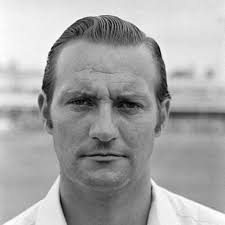
In My Mind's Eye Number 4 - Levi Wright (1862-1953)

L.G (Levi) Wright was one of the first early names of Derbyshire cricket that I became aware of, perhaps because he had the same name as my father. He was also perhaps the last survivor of the game's golden age in Derbyshire, only passing at his home in Normanton in January 1953, after a short illness.


  • Obituary notices referred to him as the 'Grand Old Man of Derbyshire Cricket' His better known contemporaries were dead long before him and I would have loved the opportunity to quiz him further on his era and the characters who made it special.


Further? Unlike anyone else in this series, Levi Wright put down his memories in a manuscript that was published by the Derbyshire CCC Supporters Club in 1980, having been written and given to a friend around forty years earlier. It would have benefited from a little editing and one gets the impression in reading it, which I have done many times, that the player just sat down and wrote, perhaps without even revisiting it.

Nonetheless it is a priceless contemporary account of county cricket in the late ninteenth and early twentieth century and packed with anecdotes and pen portraits of its greatest characters, while Wright comes across as a modest man. Not only did he play for Derbyshire between 1883 and 1909, he also played football for Derby County and was good enough to be selected as a full back and centre half for the North v South game, as well as a reserve for the full England side.

The longevity of his career accounts for a batting average of 'only' 26. While he was always a stylish player, easy on the eye as he drove and deft in his placement of the cut and late cut, he didn't make his first century until he was 35 years old and reached a thousand runs for the first time at the age of 37. Such late flowering would be impossible today, yet between 1897 and 1906 he reached his thousand runs on six occasions. In 1905, at the age of 43, he was elected one of Wisden's Cricketer's of the Year, with 1855 runs at an average of 42.

He was an easy and automatic choice throughout that period, not only for those runs (he scored 20 centuries and 72 fifties) but also for his brilliance in the field, where he earned the reputation as one of the finest cover points in the game. His speed over the ground was a factor, but he held his share of catches that confirmed a safe pair of hands. This set him apart from a team that was otherwise not known for the quality of its fielding. His book refers to one player who put down six catches in one day...

Having flowered late, it is fair to say that he went on for a few years too long. His average dropped from 20 to 19 to 11 in his final seasons, which would have been sad to witness for supporters who had long enjoyed the style of his batting. Curiously, his last four centuries all came against the same county, Warwickshire, three at Edgbaston before his final 'ton' came at Derby, in 1908. It was a poor era for Derbyshire cricket, however and there were no real alternatives to an ageing professional.

When his playing days ended he continued as a clerk for the Midland Railway, a job he had held through the winter months, before becoming a regular at the County Ground in retirement. He lived for over forty years at 42, Derby Lane in Normanton, where he was remembered as a jovial man, always happy to talk about sport. He was a keen bowler too, a regular at the Arboretum Bowling Club.

Sadly, an interview with him in 1938, for the BBC Radio sports feature Cricket Interval was inadvertently wiped.

What a pleasure that would have been to hear.

(Image sourced courtesy of David Griffin from the Derbyshire CCC Archive)

Death of Bradbury announced as cricket MAY resume

It was a shame to hear from a blog regular the other day that Les Bradbury had passed away. 

It wasn't at that time confirmed, and it would hardly have been fair for me to mention something without that. Yet the news came through official channels later that one of Derbyshire league cricket's finest-ever bowlers was no more.

He played much of it for Matlock, but also did well for Undercliffe in the Bradford League, where he helped them to win the title in 1971, taking 35 wickets while Ashley Harvey-Walker boomed hundreds of runs at the other end with his bat, the weight of a standard table leg.

He once took all ten in an innings for Matlock, not unique but indicative of a bowler of more than average ability. The call to Derbyshire colours came in 1971, when he was 33 years old. He let no one down, least of all himself and took a wicket and a catch in the match.

Yet it was indicative of the club at that time. Too many good players had gone, bowlers were in short supply and the likely rationale was that both Les Jackson and his namesake Brian had been late developers plucked from the leagues - why shouldn't it work again?

Fifteen overs, one for 53 suggested that he could bowl and surely if it was worth doing once, the bowler was worth another chance? It didn't come though and realistically he needed to be five years younger to be worth a contract. He went back to the leagues and back to taking plenty of wickets for many years afterwards.

Rest in peace, Les.

Elsewhere, there appears to be a plan to play three regional groups of four-day county cricket in August if the current relaxation of regulations works, with T20 then scheduled for September and the season possibly extending into October.

It is welcome news, the likelihood being that matches will be streamed and crowds either not allowed or minimal. To be honest I am unsure how crowds can socially distance, when there will always be people wanting past to go to the toilet and bar. Maybe on international grounds it may be realistic with capacities reduced from thirty thousand to perhaps five thousand, but even then, safe social distancing will not be without dangers.

I suspect we may have to wait until next year to see our heroes in person and, with three vulnerable people in our house, the likelihood of me being sufficiently reassured to attend this year is remote.

More on this in the coming weeks.

Thursday, 21 May 2020

In My Mind's Eye number 3: The sad story of George Davidson 1866-1899

Were it not for one feat, many modern Derbyshire fans would perhaps be unaware of the name of George Davidson. 


He still holds the record for the club highest individual innings of 274, made against Lancashire at Old Trafford in 1896. It sees his name mentioned whenever a county player passes the double century mark, yet no one, 124 years later, has surpassed it.


Centuries were also scored in that match by the two Williams, Chatterton and Storer. All three played a major role in what was a solid, if not spectacular Derbyshire side, on its day capable of beating anyone, though often flimsy in batting. Yet it is fair to say that like county elevens of a more recent vintage, dressing room relations were often far from cordial.


Levi Wright, one of the more consistent batsmen, recalled that 'the three leading professionals were unfortunately not always the best of friends and their manner and treatment of other players, particularly young ones on trial, was far from helpful'.


Indeed, things were so bad at one point that Chatterton and Davidson reputedly went through a season without speaking to one another, after an argument at dinner one evening. Davidson made a comment to the giant bowler George Porter, who suffered from sweaty feet, that apparently reduced the latter to tears. Chatterton took exception to it and laid down the law in no uncertain terms. 

Wright also separately refers to him being challenged to a fight by 'Jimmy Burns', perhaps the Essex bowler of the period. Even his obituary notices, which were sufficiently effusive commensurate to his talent, referred to a 'brusque exterior concealing a kindly heart'  and to 'his quick temper and hot-headed conduct'. 

Maybe not always an easy team mate then, but an extremely talented cricketer, one with a very interesting story.

In considering his attitude to new team mates, let us not forget that the lot of the professional in the 1890s was relatively glamorous, the challenge of someone new a threat to their livelihood. A good county player might earn only £150-250 a year, but that compared favourably to the lot of a labourer, the alternative for many, which was around £80-£100. To earn that money, you had to be selected. The standard contract was £5 a match for home games, £6 for away matches, out of which accommodation had to be paid for. On top of that, talent money might be paid, while collections would be taken for a good performance by a home player, which could earn as much as ten pounds. The irony of George's record score being made at an away ground, Old Trafford, was probably not lost on him.

A few professionals, like William Gunn and Arthur Shrewsbury of Nottinghamshire, did well in business ventures, but many worried about a life outside of the game and more than a few ended up in the workhouse when their playing days ended.

Like William Mycroft, George Davidson came from Brimington, near Chesterfield and honed his bowling skills with his father, Joseph. He was a good enough player to be a member of the first Derbyshire side to take the field, in 1871, and was known as an accurate bowler of off-spin. He took plenty of wickets in local cricket, even though he played only four first-class matches and took just six wickets. The two played together for Brimington Common and Davidson junior developed quickly. 

He worked in the iron works there as an unskilled labourer for 10d a day, before becoming professional at Keighley Cricket Club. He did well for them in 1885 and was offered a role on the staff at The Oval. Surrey wanted him to qualify and sign for them, as did Warwickshire later, but he only wanted to play for the county of his birth and made his debut for Derbyshire in 1886, against the MCC at Lord's. He took 5-37 on debut, something he was to do on 43 occasions, going on to take ten wickets in a match ten times. By means of comparison for modern supporters, his strike rate per wicket lies between that of Mike Hendrick and Harold Rhodes, confirming his ability quite nicely. 


For all that he holds that record score, Davidson averaged only a shade under 24 as a batsman from 260 innings, including two other centuries, but he added to that with 621 wickets at 18. If one takes the claim of any cricketer as an all rounder seriously, their batting average should exceed their bowling one, and these figures confirm that Davidson must have been a very fine player. 

Descriptions of his bowling suggest someone of Tony Palladino's pace, described as 'above medium but not fast'. He had a unique 'semi-circular' run up, starting at wide mid-off and had the ability to bowl for long spells, frequently doing so. Levi Wright recalled him disliking being taken off for any reason and praised him for his stamina throughout a long season. On one occasion at Leyton, he bowled from the start of the day at 12 noon until 1.35pm before a run was scored from him. He was taken off five minutes before lunch at 1.55pm and resumed again after the interval. A man of average height, he bowled right arm with great accuracy, as evidenced by a career record in which he conceded only two runs an over. He moved the ball off the pitch to great effect, with a fast, high action that enabled him, in the modern parlance, to hit the wicket hard.


The Lancashire game in which he scored 274 saw him bat for seven and a quarter hours. He followed this by bowling 57-34-75-3 in Lancashire's first innings, in which they were forced to follow on. To the modern viewer, used to players complaining of burnout and tiredness after a Test series, this makes astonishing reading.


Davidson also reached a century as part of another then record, the team score of 645 against Hampshire at Derby in 1898. With declarations not possible at this time, his captain, Sydney Evershed, told him to get out so the bowlers could get to work, but Davidson, confirming his contrary nature, ignored him and batted on to score his century, following it with another 31 overs and 6-42. As a batsman he was described as defensively sound, with the ability to play strokes when he got going. 

His annus mirabilis was in 1895, when he scored 1296 runs at 28 and took 138 wickets at less than 17. These are the figures of a special player, one who deserves to be mentioned when discussions of the county's finest take place. It was the first time a Derbyshire player did the double, and perhaps the result of spending the previous winter coaching and playing in South Africa, keeping his eye in quite nicely. He returned from the Cape 'bearing gifts and testimonials' after a series of fine performances. His record season for Derbyshire  saw him presented with a gold watch and chain by his friends at Brimington, as well as being talked about as one of the finest all round cricketers in the country.

He took a benefit in 1897, but contemporary reports blame Queen Victoria's  Diamond Jubilee celebrations and the weather for a cheque 'of meagre proportions' (£200) and comment 'it is not pleasant for the sportsmen of Derbyshire to feel that their favourite's reward was such a wretchedly small one and amounted, in fact, to absolute insult'.

It is hard to argue. Three times he took nine wickets in an innings for the county, every season but one that he played being the leading wicket-taker, while in 1892 he headed both the batting and bowling. Several reports comment that he was the 'biggest single reason' that Derbyshire remained a first-class county. His line and length were especially noteworthy and after twice bowling A.C.MacLaren, a giant of  the age, on a flat wicket in 1895, the Lancashire captain declared that 'he would exhaust anyone's patience with his metronomic accuracy'.


His final game for the county saw another record to which he contributed, albeit inadvertently. He had missed several matches with a strain when Yorkshire visited Chesterfield in 1898 but declared himself fit to play in Walter Sugg's benefit match. Wright recalled that it was obvious from the first ball that he wasn't himself, and it was all he could do to finish his only over. His absence from the rest of the innings left Yorkshire openers John Tunnicliffe and J.T. Brown a novice attack to face, and they responded with a then record opening stand of 554. It was the other side of a complex character, trying his best to play in the match to help his friend, even when he likely knew in his heart that it wouldn't work.


George never played for the county again. During the winter that followed, a bout of influenza quickly worsened into pneumonia and the man with the iron constitution died on 8 February 1899 at the tragically early age of 32, leaving a wife, six children under the age of seven and very little money. The editor of Cricket magazine in 1899 hoped that 'energetic steps might be taken by the gentlemen of Derbyshire on their behalf'. Given that the club was in its perennial impoverished state, it is unlikely that they ever did so.

It was an 'irreparable loss to the county and to the game of cricket', evident in the outpouring of the newspaper reports of the day. Few knew that he was unwell, so the shock was considerable for supporters and cricket followers. The story was covered in local press around the country, the opinion firmly of a very fine player cut off in his prime. Maybe, even yet, one of international standard.

'A very large crowd' attended his funeral, before he was interred at Tipton Cemetery, near Dudley on 13 February. This was at the wishes of his widow, who hoped to remain locally, even though the family wanted him buried in Brimington. His team mates Hancock, Storer, Sugg and Chatterton were among the pall-bearers, while wreaths were received from his captain, Sydney Evershed, the club and several individuals, as well as the MCC. An unusually candid report in the Derby Daily Telegraph of the time revealed that the player had been told, in the days before he died, that he could never play cricket again, such was the effect of the illness on his heart. Such news would have been hard to bear in his already weakened state.

In his obituary, Wisden recalled him as a cricketer 'just short of the highest class' who 'had he played for a better county might have enjoyed a still more brilliant career'. Former England captain Henry Leveson-Gower, a contemporary, in his book Off and On The Field said that 'he would have gone much further had he plied his skills elsewhere'. 

We have heard that plenty of times over the years. Given that players at that time continued well into their forties, he had at least another ten years ahead of him, when further records may well have been set.

Next year will be the 125th anniversary of his record score and there is perhaps an opportunity for the club and its supporters to do right by George Davidson. My research suggests that his grave at Tipton Cemetery is unmarked and may even be that of a pauper. It would be proper to look to mount a plaque, at least, to mark his last resting place.

After all, it is the longest surviving record in the county's cricket and his loyal and significant  contribution to its early years is worthy of belated recognition. 

(Image sourced by David Griffin from the Derbyshire CCC Archive)

Changes..

Most of you will have noticed that the blog has a new look today.

Sadly, the current conditions have meant that erstwhile blog sponsorship has terminated and I would like to say a huge thank you to Office Care for their support over a number of years. That support enabled the blog to flourish and ensured that I was getting something for the time put into writing it.

I have also lost a couple of linked advertisers and thanks go to them, especially to former Derbyshire cricketer Chris Taylor, whose sports business has been a great supporter in recent seasons.

Which all means that I am looking for a new sponsor or sponsors, either for the blog overall, or to be linked from it to a site of your choice. Please message me if you would like to discuss - I fully understand that these are difficult times, but I am more than happy to discuss options.

The alternative, which I will hold off from for a few weeks, is to reintroduce Google ads - being selective over content but bringing in a few pennies (literally) when the blog is read. It is far from a preferred option, as I feel it is a little intrusive, but I will see how things go.

I still don't see myself covering much current Derbyshire cricket over the course of the current summer, but will be keeping the content going, starting with the next in the series on Derbyshire legends - In My Mind's Eye.

Any ideas for articles or talking points, please drop me a message through the blog, or email me at peakfan36@yahoo.co.uk

Friday, 15 May 2020

In My Mind's Eye Number 2: William Mycroft 1841-1894

Despite not making his first-class debut until the age of 32, William Mycroft was the first of the outstanding line of Derbyshire seam bowlers. Indeed, he was probably, according to contemporary accounts, one of the fastest, as many a batsman was defeated in the defensive stroke by his fast left-arm deliveries.

Perhaps he was a nineteenth century Mark Footitt, and the extraordinary thing is how many wickets he took when perhaps the years of his real pace were behind him. He was a classic late developer, however and reports suggest that he 'didn't really amount to much' until his late-20s. The great Kumar Shri Ranjitsinjhi described him as having 'a high action and getting a lot of spin on the ball, as well as swerve, all at pace'. All this, while looking like an earlier incarnation of Australian fast bowler, Merv Hughes.

He was born at Brimington, near Chesterfield, the son of a miner who became a publican, jobs which William did in turn himself. His county debut came in 1873, when he took six wickets in his first match that summer, then took twenty in the only four matches of 1874. His ability was noted and his reputation quickly grew, so much so that in 1875 he topped the national bowling averages with 75 wickets at just over seven runs each. With eleven five-wicket hauls he became a feared bowler, enhanced by the remarkable match figures of 14-38 for the North against the South.

He wasn't a big man, standing only 5'9'' but he was sturdily built and strong. There was a suggestion that his yorker was thrown, but he was never called and it continued to be a potent weapon in his armoury. He was as dangerous a bowler as any in England in the 1870s, when he took a hundred wickets in a season twice. In 1877 he took 157 wickets in just 22 matches for Derbyshire and the MCC, while the following year he became the first man to take a hundred wickets in a season for Derbyshire alone.

A measure of his importance to the side, which was far from a strong one, came at Southampton in 1876, when he took seventeen wickets in the match for 103 runs, also holding a catch, of the nineteen wickets that fell - yet his side still lost by one wicket. He took 9-25 in the first innings, seven of them bowled, then 8-78 in the second, leaking runs as he tired but almost winning the game single-handedly, after his side had been bowled out by a lob bowler. He even held the catch at slip that deprived him of all ten, confirming him as a team player, regardless of his individual talent.

Injuries started to affect him in the 1880s, and he played his last game for the club in 1885, at the age of 44. He later became an umpire for a short time.

It was a relatively short but meteoric career, in the course of which he took 534 wickets for Derbyshire at less than twelve runs each, with 863 in all matches, for a similar average. Notwithstanding the variable pitches of the day, he must have been a remarkable bowler. If one considers WG Grace as the star batsman of the generation, their battles ended with honours even, indicative of his ability.

That talent was diametrically opposed to his limitations as a right-handed batsman. He was one of a select band of players to end a lengthy career with more wickets than runs, just 791 runs at an average of five in 138 matches - a reputation as an 'erratic' runner between the wickets, didn't help. Yet consider this - 87 five-wicket hauls in those 138 matches, 28 times taking ten or more. They are figures that compare favourably with any in the game's long history.

William Mycroft died of influenza at his home in Freehold Street, Derby, on 19 June, 1894. Rheumatic illnesses had plagued his final years and money was in short supply, though a Derbyshire supporter named John Cartwright, who scored for the county when he was able, organised a subscription which saw one hundred pounds handed over to the old hero. His obituary notice, in the Nottingham Evening Post of all places, made it quite clear - 'if he was not the best fast bowler in England, he could certainly lay claim to no superior'.

Two curiosities about him to finish. The writer, Sir Arthur Conan Doyle, himself a decent cricketer who played at first-class level, was rumoured to have chosen the name of Sherlock Holmes' brother, Mycroft, after watching the Derbyshire bowler  against the MCC in 1885. The story gains some credence with the first Sherlock Holmes story being published two years later, especially when the opposition that day included the Nottinghamshire players, Mordecai Sherwin and Frank Shacklock.

Finally, William's son, Thomas was later the father-in-law of the Derbyshire opening batsman and subsequent coach, Denis Smith. The great bowler was long gone by that time, but I think he would have approved.

Not a bad family lineage, is it?

(Image sourced by David Griffin from the Derbyshire CCC Archive)

Pining...

It was watching our dog, Wallace, yesterday that I realised how I must be for the cricket season.

He was lying by the door, every noise he heard worthy of investigation, each one perhaps heralding the return of his 'Mum' from the supermarket.

I am missing the cricket badly. It is something I haven't experienced before and although I try to stay optimistic, I am resigned to there being no county cricket this summer. If they pull it off, well done, but I can't see it.

The press piece released by the club this week on Michael Cohen, and how he has been living with bowling coach Steve Kirby since getting here brought it home to me. There was much to like in the prospect of Sean Abbott joining Ravi Rampaul et al but the prospect of Michael Cohen, a left-arm quick bowling 90mph held considerable interest. So too did seeing how Sam Conners had kicked on over the winter, with the attack, even before considering our raft of talented all-rounders, looking so much more incisive than the previous year.

Alas, we may have to wait another 11 or 12 months to find out and there is nothing we can do about it.

To fill in the time I have been writing my 'In My Mind's Eye' series, enjoying a week off work and getting my garden pristine.

The new series starts today and I acknowledge the help of David Griffin and the DCCC Cricket Archive in sourcing quality photographs.

I decided on ten players whose lives were worth the telling, focusing particularly on those who were less well known despite their major contribution. All are pre-Second World War and I discovered material about each that I haven't seen before. It was my reason for writing, perhaps leaving something for posterity, but keen to recognise that the only important players in the club's past are not just those who played in the past thirty years.

Polls and modern discussions naturally focus on what we know best. If, at the end of the series, you know a little bit more about some of our bygone legends and appreciate what they did for the club, then the writing will have been worthwhile.

Some of what I have discovered really blew me away.

Stay fit, stay well, stay interested! And please do comment, because I genuinely love hearing from you.

Friday, 8 May 2020

In My Mind's Eye - a new series

These are challenging times for a blogger, especially one whose interest lies specifically in the cricket history of the county of his birth. With no cricket to write of, and having covered post-war Derbyshire cricket with my second book (and ten years of blogging) I have given due consideration to something to keep the momentum going.

That will finally see the light in this new series, that I have called In My Mind's Eye.

In it, I will be looking at cricketers who played before the last war - quite apposite, on VE Day - and in some cases before the Great War. It will feature players that I have read about in contemporary accounts, and will utilise the notes that I have taken over a half century of years, painstakingly produced like some of my half centuries were in weekend cricket.

Part of it comes from my frustration that these players are, to my mind, criminally overlooked when it comes to modern polls. Of course, there is no one around to state their case and cynics will say that they couldn't have been in the same league as modern players. You see that whenever a piece of archive film is shown on social media. Only a fortnight ago, the great Ranjitsinjhi was belittled for his 'lack of technique' in a video that showed him in the nets. It rather missed the point that he was wearing no pads, was clearly hamming it up for the cameras and was the biggest single influence on the game's growing popularity before the first war, alongside WG Grace. 25,000 runs at over 50 an innings suggests he could play, these often made on wickets that could often be deemed 'sporting', especially when the rain fell and rendered them 'sticky'. 

There are no players of that calibre in Derbyshire's early history, but the list of players that I will be featuring were standouts on a local scale. In some cases this was for their talent alone, in others it was for their personality and contribution to the development of the county side.

It is appropriate to do it this year, marking the 150th anniversary of the club. It is also important to recognise that in any sport you can only be the best of your era. Jesse Owens won four gold medals in the Berlin Olympics of 1936, but would struggle to escape the heats with the times he set today. Does it diminish his importance as an athlete, or his greatness? No, not at all, at least for me.

The players of the early period may have looked rag, tag and bobtail outfits, with sashes, cummerbunds, braces, cravats and flat caps in team photographs. Their apparel may have been off-white, but then cleaning them will have been a challenge, in an era way before washing machines.

They played on grounds where facilities were basic, or non-existent. Sometimes there were only a couple of toilets for players and supporters alike, while there were at times no washing facilities and everyday clothes were hung from a nail, hammered into the wall. A sink, with cold water, was on occasion a luxury, enabling a quick freshen up at the end of the day.

It was still eleven against eleven and the cream still rose to the top. There was a lot of excellent cricket played by some tremendous players, some of them wearing Derbyshire colours.

They are players I would have loved to see, have tried to picture over the years and would like to see recognised for posterity.

I hope that you enjoy it.

Thursday, 7 May 2020

Brian Bolus: an obituary

Those who saw Brian Bolus speak at cricket dinners and societies normally heard a man of dry, self-deprecating humour. 

'For those who saw me bat, let me apologise' he would say, before delivering a talk that displayed a sense of humour as expansive as his batting frequently wasn't. A man of contrasts then, engaging company off the pitch, a gritty, stereotypically northern batsman on it. Brian was like the northern batsmen recounted by Neville Cardus, with 'no fowers before lunch and precious few afterwards'.

His death was announced today and it was rather like the man himself, quiet and undemonstrative. Growing up in Yorkshire, he graduated to the fine side of the late 1950s and early 1960s and was a solid, dependable member of it, before being replaced by a younger model, the man who defined that moniker, Geoffrey Boycott. He made the England side and played for it seven times, averaging 41 and never being dismissed in single figures in his twelve innings-career, a record that still stands. His highest score was 88 and in hitting his first ball in Test cricket back over the head of the bowler, Wes Hall, he made perhaps one of the most uncharacteristic of introductions to the international game.

He moved south and became a fixture in the Nottinghamshire side in 1963, where he remained for a decade. He racked up his thousand runs for the season in ten summers, the benchmark by which the county stalwart was judged and provided the reliable grit in that period, the side's batting and cricket latterly dominated by Garfield Sobers. In much the same way that I hoped for Chris Wilkins to get in early at Derbyshire, supporters in Nottingham saw those who came before Sobers as merely a warm up act, but the runs he scored, more than the way that he made them, ensured he was a respected and valuable part of the team.

In 1973 he moved to Derbyshire as captain, in a period when our recruitment was generally of ageing players from elsewhere. It was an onerous task, as it was one of the weaker sides I have seen in county colours and at 39 Brian was understandably past his best. Too many good senior players had left at the same time and the batting was flimsy, at best, the bowling perhaps even weaker. It accounted for him being unwilling or unable to take a risk, as batsman or captain, knowing full well that two quick wickets often heralded an unseemly and hasty demise for the innings. The result was runs made less against the clock than the calendar.

Again though, he registered a thousand first-class runs in two seasons, even if one-day cricket wasn't really his game. With the resources at his command, his approach was often to try and avoid defeat, something that couldn't work in a limited over match, of course. It made for grim watching in that period, but it took someone special, with the ability, charisma and sheer personality of Eddie Barlow, to rescue the county from the doldrums in 1976.

I will remember him as a batsman strong off his pads and not without strokes, but his unwillingness to use them or take a risk, while understandable, made for Derbyshire watching that was only for the diehard and purist. He will best be remembered, perhaps, as the man who sent Alan Ward off the field for refusing to bowl, against Yorkshire at Chesterfield in 1973.It wasn't the best day for either man, but we all make mistakes.

He later served as an England selector and chair of the management advisory committee, before becoming Nottinghamshire president for two years.

His death, at the age of 86, will be mourned by cricket supporters of a certain vintage in three counties. Few will remember him for his effusive stroke play, or for inspirational captaincy.

But he was a man who always gave one hundred percent and over 25,000 runs in the first-class game confirms that he could play. Besides anything else he was a lovely bloke and few had a bad word to say about him.

Most of us would take that as an epitaph.

Rest in peace, Brian.

Friday, 24 April 2020

The goal posts move again

So, no cricket until the start of July now, according to the ECB press release this morning, closely followed by one from the counties themselves.

Nine rounds of County Championship cricket will have been lost, but there is still a commitment to get both red and white ball matches in, if at all possible. The Vitality Blast will be pushed as late as they can, to allow the best chance of the biggest county earner taking place, while a further discussion will take place next Wednesday on the new competition.

On the one hand there are grounds for optimism, perhaps some cricket to enjoy in two months, but the reality is that it will be unlike anything we have enjoyed before. I suspect that even the level of attendance we see at the average four-day game may be too great for safety, while the packed crowd of a T20 night is likely to have zero chance of taking place.

Streaming will be the way to go, but will commentaries and press boxes be possible? The games are likely to have less atmosphere than the quarter-final last year played at The Riverside, when Old Trafford was needed by England and Lancashire played Durham in a cavernous, empty stadium.

It will be not as we know it, but will be cricket all the same. Assuming it happens.

My own gut feeling, and it can only be that, as I am not trained in medical matters, is that July will in turn become September and we MAY see some sporting participation return at that point. I just have concerns that already some are struggling to observe the requisites of social distancing and if that continues, the curve that we all need to see flattened will take longer.

All rather ironic in relation to the weather, which is remarkable for the time of year. I sat in our garden yesterday and watched an array of birds swoop in and out of baths, a cold drink at my side and craved sitting in the stand at Derby, watching the action unfold. Or wandering around the boundary, chatting to friends old and new, joining in the applause for another boundary, another wicket. Better still sitting in a comfortable chair at Chesterfield, enjoying a cooling breeze on a hot day, remembering days and deeds over fifty years, as our heroes glide across the grass.

Oh, my Godleman and my Madsen, long ago...


Thursday, 16 April 2020

A strange summer

Normally at this time of the Spring, the blog is cranking into gear and I am writing and publishing posts on a daily basis.

This year, sad to relate, it would appear we are still several months away from county cricket and it is all so sad. Of course, there are bigger things going on in the world, but when my nightly chats with Dad always switch to the greatest of games and he, at 92, pines for news on the club it is hard for him, for me, for all of us.

Yesterday's news was the cancellation of the contracts for this summer of Sean Abbott and Ben McDermott. It was always a matter of time, when other counties were starting to do the same and indicative of  a growing feeling that there will be little if any cricket this summer.

It is tough, losing the best part of a summer in a career that is already finite and relatively short. Especially so if you have more years behind you than ahead, perhaps even more if you have earned a summer contract to show what you can do. Toughest of all, perhaps, for those in the final year of deals and hoping to show that they are worthy of a contract extension.

Counties will face a dilemma on this, of course. Will a player who was good in 2019 still have it in 2021, or will the eye have gone for batsmen, the nip for bowlers? There will be several around the circuit who will have been robbed of one last hurrah before slipping into retirement and a new career.

For club cricket it will be challenging too. Some players will get used to doing other things at the weekend, even if it is cosy domesticity and sprucing up their garden. Yet plenty of others will be chafing at the bit to get the whites washed and ironed, the new bat knocked in, the new thigh pad tried out, the new gloves given an airing.

At least Derbyshire have done the right thing in deferring the deal for their Aussies to next year, subject to agreement from their Cricket Board. It may not work out quite so well as it would have this summer, when numerous Australians were planned to be over here with a summer free of international cricket. Next year may see tours eat in to availability.

Always assuming, of course, we are able to return to normality by then. When one reads experts suggesting that a return to packed grounds and stadiums would be 'impossible and dangerous' before a vaccine has been found and made widely available, normality seems some distance away.

It is good to see counties and players trying to maintain engagement on social media though. Between players answering supporter questions, offering tips from their gardens and playing each other at a cricket video game, there is plenty to enjoy, even if it really isn't the same.

I'm not really a gamer, but am finding Stick Cricket Live a lot of fun, after the suggestion of a work colleague.

I'm just pining, like the rest of you, for the return of the real thing.

Thursday, 9 April 2020

John Wright is new club president

The news that John Wright is the new club president is welcome, a ray of light in what threatens to be a summer of largely cricketing darkness.

If one were to sit down and come up with the names of the truly great batsmen that have played for Derbyshire, the chances are that John would make the top four, alongside Dean Jones, Peter Kirsten and Mohammad Azharuddin.

Even in such company, were you were to choose one player who, irrespective of the state of the wicket and who was bowling would get his head down and graft, he might well be my first pick.


For all that he had a fine array of shots and, like all good left-handers, was immensely strong off his legs and especially through mid-on, the thing that I most remember John Wright for was his 'leave'. He was the best judge of the ball to let go I have seen in county colours and an unerring ability on a humid morning, when the ball was swinging around, to play only what he had to. The 'oohs' and 'aahs' of a myriad county seamers must have been music to his ears and if it bothered him at all he never showed it. Instead, he just leaned on his bat, chewed his gum and smiled.

That was another thing about John Wright. He smiled a lot and seemed to appreciate that being paid for playing cricket, while undoubtedly not easy, was something that a lot of us cherished. He was one of the more genial players on the circuit and was well-liked by cricket fans around the country. Certainly in Derbyshire, where the support for him never wavered, long after he finished playing and even before his return as T20 coach.

He might have ended up at Kent, where he turned up for trials, but their surfeit of overseas stars saw him try his chances at Derbyshire, where 150 in a second team game convinced the county that they had found a good 'un.

He was that all right. From 1977 to 1988, Wright was a model of consistency, his second-wicket partnership in some of that time with Peter Kirsten giving the county the greatest solidity they have ever had in batting. To a Derbyshire fan of my vintage, thinking back to the two of them batting at Lords in 1981 will bring a wistful smile to the face. When they were in full flow, which was often, there appeared little that the opposition could do to stop them. Indeed, a sign of their ability was how the opposition last-day targets got higher and higher. For supporters who recalled all to easily our inability to score 200 in the last innings, seeing us chase down 250, 300, even 350 was a joy.

1982 was the peak. In that golden summer, Wright scored 1830 championship runs at 56, with seven centuries and five fifties. Kirsten scored 1941 runs at just under 65, eight centuries and six fifties. I would listen for the cricket scores on the radio and in my mind's eye we always seemed to be a hundred and plenty for one, with both going like trains. I saw them score plenty in person too and for two Derbyshire players to be within touching distance of 4,000 runs between them, even now, seems extraordinary.

They were good friends and shared a flat together for some time. I remember a former girlfriend of mine telling me around that time that she'd been out for a drink with some friends in Chesterfield and chatted up by a 'New Zealander who played cricket for Derbyshire'. I was jealous, but more that I hadn't had the chance to chat to him myself, which probably shows I wasn't all that serious about her...

In 1984 Wright averaged over 60 and scored 1200 runs in just 21 innings, but by that stage he was job-sharing the overseas role with Michael Holding. In a delightfully self-deprecating way, he told of how the opposition were always pleased to see his name on the team sheet in that period, as it meant that they wouldn't face trial by Holding. One got the impression that a lot of the enjoyment had gone by this time, something confirmed in his excellent autobiography, but he continued to give value for money and bad trots were few and far between.

He was a thinker about his game and team mates recall his gluing his top batting glove to the bat handle so it was in the right position all the time. They also attest to the origin of his nickname 'Shake', due to his messy kit bag, which he used to shake onto the dressing room floor in an attempt to find the cleanest gear. He was immensely popular in the dressing room and in 1976, when Eddie Barlow arranged a team bus for away games, Wright kept the players entertained with his singing and guitar skills. He was also willing to help with advice for younger players and few were surprised when he became a respected coach.

His dry wit continued in his successful tenure as coach of the Indian national team in the era of Dravid, Ganguly, Sehwag and Tendulkar. 'The most important job is to make sure you get all the practice balls back'  he said, accepting that players of such talent needed little coaching.

I will always remember his innings against the West Indies at Chesterfield in 1980 as perhaps the bravest I have seen by a Derbyshire player. It was a typical green-top and Roberts, Garner and Marshall were fast and nasty, most of the batsmen taking blows to the hands and body.

Wright took more than most, but made an extraordinary 96 from a total of 229. I am sure that the visitors wouldn't have grudged him that extra four runs in an innings of remarkable skill and courage. He went on to become the first New Zealander to pass 4,000 Test runs and remained a player that the opposition knew that they would need to dig out.

His return to the club as T20 coach brought a change in our approach to the format, one that has been developed since. It came after a memorable Skype interview I had with him for my second book, which took some time to find an appropriate hour between here and New Zealand, but was worth the wait.

His fond memories of his county stint and the friendships he made were touching, while his laughter as he recalled stories from the circuit made it an interview I really didn't want to end.If you haven't read it, do pick up a copy from a good book shop, because John, as well as a thoroughly pleasant man, was comedy gold.

He deserves warm congratulations on his new role. Let's just hope that the pandemic relents, we all come out the other side intact and we can meet up again in the very near future.

Congratulations, Mr President. 

There will be no complaints on your deserved award.

Saturday, 4 April 2020

Will we, won't we?

I have no idea if there will be any cricket this summer, any more than the rest of you.

Our best chance is if the silly idiots who insist on meeting up and carrying on as normal toe the party line and do what they are asked. The horrific Covid 19 is sweeping the globe and any risk, for any sport, is simply not acceptable.

I hope that we all come through the other side relatively unscathed and apart from a dog walk per day I haven't left the house and garden for over two weeks. Whether that is enough, time will tell.

This week has seen various reports in the media. One said that there would be no cricket this summer, another that the ECB has four fixture options on the go, depending on what time is available when the all-clear is sounded.

For what it is worth, I think the biggest mistake they could make would be to try and launch the new competition this summer. Yes, the lack of cricket  might enhance the appeal, somewhat akin to the Victory Tests at the end of the last war, yet it would do much less for the supporters than the Vitality Blast, and considerably less for the coffers of the various clubs.

I have seen suggestions that they will play the new competition and the Blast, given time, but see that as a non-starter. For one thing, it would annoy the traditionalists who have supported the game for many years. I know that the four-day game is the least lucrative, but it prepares players for the greatest format of all, Test cricket, and is still the version for the aesthete and connoisseur. I love the cut and thrust of the format, plus it also gives me the best value in travelling a long way to see cricket.

It would also mean that the many players who are not selected for T20 will play no cricket this summer. One would assume that the Professional Cricketers Association have already made their thoughts clear on that one, with some players picking up two salaries for the summer and others perhaps only a reduced one.

Better might be scrapping four-day cricket for one season only and playing two three-day games in a week, with a day in between. If the counties were split into two, or even three groups, you wouldn't need too many weeks to have sections and perhaps then a final. It would be tiring for players, but you would be talking a season of perhaps only two months, when they haven't played in over a year in most cases. It would likely have to be played without overseas players, as I would be surprised if international travel resumed so quickly, but would give something to the loyal fans who have been there for years.

I suspect the Vitality Blast would set new attendance records, were it to go ahead. I share the bullish attitude of Dave Houghton, in that we have a real side coming together with genuine prospects of success. Mind you, the Aussie overseas would have given us an edge this year, so that might temper things slightly.

Of course, it could all be academic and we may have to wait another twelve months for county cricket.

Patience is key.

Sunday, 22 March 2020

The wait continues...

So no cricket until the end of May, which surely guarantees that April and May are two of the best months of weather we have seen in years...

I hope that I am wrong, but I can see our wait for the greatest of games going on for longer than that. Perhaps we will get some cricket in between July and September, but what that delay does for the game at all levels is a moot point.

I know my old club side started to struggle when an ageing drainage system that we could not afford to replace cost them a lot of matches, even when the sun shone brightly. Players started to find other things to occupy their time and when we managed to get back onto the field, availability was increasingly a struggle.

It may take some time, but I hope that people support their local and county clubs, during and after this crisis. I have no idea what form the county game will take for the remainder of this summer, but I hope that there is some four-day cricket, even friendlies, because otherwise the game doesn't work for me. Six hours each way for a Vitality Blast game doesn't work, twelve hours of travelling for three hours of cricket. I am not alone in that, so just hope that whatever cricket is manufactured for a potential start date doesn't ignore the traditionalists, of which there are many.

As I said the other day, I will try and produce new material to keep the blog interesting and fresh, even though there will be no live cricket to write about for the next eight weeks at least.

Whether the cricket we have coming up will feature our current overseas players is another question. It will all depend on the dates, the competitive element and the speed at which a semblance of normality can be restored.

England's land may still be green and pleasant, but it is an odd one, right now.

Stay safe everyone. Keep in touch and see you on the other side.

Thursday, 19 March 2020

Concern around the counties

According to a report in the Telegraph, around half of the counties could become bankrupt if the Coronavirus outbreak allows no cricket this summer.

That sobering thought is one to make a man choke on his cornflakes, yet should hardly come as a surprise. Cricket, like any other business, depends on cash flow and  without the major injection from the T20, especially, many will struggle. It is not just the crowds at the cricket, it is the potential cancellation of money-spinning events, income from refreshments, memberships...we could go on.

Given that the ECB have ploughed a lot of their reserves into the competition that no one wants, were I a betting man I would have a flutter on any cricket from July onwards, which is being mentioned as a potential start date, comprising that competition and a rearranged T20, with little to no four-day cricket for traditionalists such as me.

Having said that, the counties will still get their ECB money, which will be a lifeline for many. We are also fortunate to have announced that record £400K profit, and there will be additional concern around the country where results have been less impressive.

They could feasibly play into October, of course but at this stage, when the goalposts are changing all the time, we have no idea when we can return to even a semblance of normality. When sport is allowed to return there will be plenty of it competing for attention and we can only hope that the Championship in football doesn't end up scheduled on the same night as a T20 game, with an inevitable loss of income in what is very much a football city.

I am sure that the return of sport and access to amenities that we have perhaps taken for granted for too long  will see bumper crowds. It is why I see this as a silver lining for the ECB, because if the return of sport is their competition on national television, there may even be hardened cynics who will tune in for their 'fix'.

It is a major concern and like many others, fortunate to have been born well away from the disruptions of world wars, something I had hardly considered. A summer without cricket is like twenty-four hours without daylight. Much as I enjoy my football, cricket is and will always be my first love. Yet we must all keep it in perspective, when there are thousands dying now and likely in the weeks to come.

It presents additional challenges, of course. Not least for Derbyshire, who were due to celebrate their 150th anniversary this summer. I would assume that serious consideration is being given to postponing the celebrations to next year, which will not be strictly accurate, but allows time for the many ideas they have come up with to be planned with a greater degree of confidence.

I am sure that there will be plenty of commemorative merchandise in production, perhaps already at the club. There will be those who feel that we should still celebrate it in the truncated summer that we MAY have left.

My own thoughts are that it should be delayed until 2021. They could sell the merchandise, by all means, but ideas that I have seen for a cricket match, gala dinners and events with large crowds expected are going to have a question mark over them for some time to come. Northamptonshire's Alex Wakely has bowed to the inevitable and deferred his testimonial until next year, so to me it makes sense.

As for me, I will continue to write blog pieces when there is news, and hope to at least mark the anniversary with a series of pieces on memorable matches from our history.

I don't expect to see any cricket sometime soon, though.

All we can do is keep fingers crossed.

Your comments on the above are gratefully received, as always.

Sunday, 15 March 2020

And then...

No sooner had it begun than the Derbyshire players are set to return home, in light of the corona virus.

It makes sense, and is not at all unexpected. With sporting events around the world being cancelled, and other clubs on overseas tours returning home, it was only a matter of time before we did so.

Pre-season will now continue at the Pattonair County Ground.

As for the season itself, who knows what is going to happen?

Saturday, 14 March 2020

Derbyshire ease to pre-season opener win

Derbyshire 174-5 (du Plooy 79* Madsen 44, Dal 22*

Zimbabwe Select XI 126-8 (Chari 42, McKiernan 2-25)

Derbyshire won by 48 runs

What a pleasure it is to be writing about Derbyshire cricket again after the long winter!

How long it lasts, of course, is down to circumstances beyond cricket control, but the fielded eleven did all that could have been expected in their tour opener, played over 20 overs.

There was a touch of deja vu in the performances. After the early loss of Critchley and Reece, the openers, Madsen breezed to 44 from just 28 balls, before Leus du Plooy played in the accustomed manner for an unbeaten 79 from just 51 balls, with 6 sixes and 3 fours. He got fine support from Anuj Dal , who made an unbeaten 22 as the pair added 83 from the last seven overs.

du Plooy hit three successive sixes at one stage and it whets the appetite of supporters quite nicely.

The Zimbabwe XI lost two early wickets to Ravi Rampaul and Mattie McKiernan, before a third wicket stand gave a little hope. They were never up with the rate, however and a flurry of wickets towards the end gave the innings a lopsided look.

Rampaul once again was a standout, with 2-14 in his four overs, while credit goes to McKiernan, who opened and closed the bowling after missing most of last summer. Two leggies in the side was interesting to see, and McKiernan, like Rampaul, bowled sixteen dot balls. Tony Palladino played but didn't bowl, Billy Godleman didn't play and Alex Hughes skippered the side.

The only concern was Sam Conners not finishing his fourth over, but hopefully he did so as a precaution, rather than anything serious.

We'll not read too much into it, but it is always good to get a win, something they accomplished with a lot to spare.

PS Conners was later revealed to have had cramp in his foot, so nothing serious! 

Friday, 13 March 2020

Derbyshire return record profit to end year of great encouragement

After one of the most encouraging on-field summers in many years in 2019, Derbyshire put the icing on the cake today with the announcement of a profit over the year of £402,000.

It is a club record and worthy of huge congratulations to everyone involved in the off-field side of things. They run a tight ship and there is little to spare in the staffing, but it shows what can be done when everyone has a job to do, knows it and does it to a very high standard.

There was a time, in the early days of this blog, when I was critical of the way the club was run, but it is very hard to do so today. It is a friendly set up and the warm welcome from all involved is a pleasure.

It is easy, as a supporter of the cricket side, to become blase about the 'other stuff'. Yet it is in the success of that other stuff that the club can develop and thrive. Together with their income from the new media deal, the success of the annual fireworks show, the festive parties, concerts and meetings contribute to a very healthy picture. As did making Finals Day for the first time, which put a handy £57K into the coffers, while record attendance receipts saw an additional £91K.

It has helped Dave Houghton to strengthen this winter, while there are plans to increase the seating, replace the scoreboard and install new toilets, as well as enhancing the concessions around the ground.

I was only saying to my Dad the other night that I couldn't recall being so enthused with the set up and staff of both my football and cricket teams as I am at present. Phillip Cocu is doing a sterling job at Derby County, while Dave Houghton gives off similar calm vibes, of a man who knows what he is doing and how to take the club forward.

'Underestimated no more' is the tag line used often in social media posts from Derbyshire, and they are right. There will be few teams turn up to play us this summer and expect us to roll over, as the side is packed with professionalism from top to bottom.

If we can display another ten per cent improvement in the playing personnel when we get to the season opener, what a belter 2020 may turn out to be.

A record profit as we begin our 150th anniversary year.

Winning a trophy would make it a very, very special one indeed.

Saturday, 7 March 2020

Pre-season tour begins - and the end for Fantasy Cricket

Derbyshire's players fly out to Zimbabwe tomorrow on a three-week tour.

At the invitation of Zimbabwe Cricket, they will play two three-day matches, two 50-over matches and two T20s on the tour, which runs until March 29.

It will be ideal preparation for a summer in which only the foolhardy will discount the talent in the squad. I know that I have been optimistic in seasons past, but there are now real grounds for optimism among supporters, with a strong and relatively young squad that covers most of the playing bases. As long as we have the same level of commitment - and I suspect that is a given, with who we have at the club - we should be challenging this summer.

I am especially interested to see how our attack goes, with more options than previous summers. If two or three of them fire, then the batting should enable us to win games in all formats.

I look forward to following and reporting on the tour matches.

Also eagerly awaited will be the return of the county's excellent streaming service, this year enhanced as they have sorted the issues that previously saw the radio commentary out of synchronisation. I only occasionally listen to cricket commentary on TV or radio, but plenty do and this will improve the experience for them.

One thing that won't be around this summer is the Fantasy Cricket League. The Telegraph announced this week that they won't be doing it, for the first time in a quarter of a century. It is sad, especially when they cite a lack of interest in county cricket as the reason, but there's not much that we can do about it. Apologies to those whose enjoyment of the summer was enhanced by the challenge, but it is very much out of my control.

You will see my thoughts and comments on the club, its cricketers and events as usual and I hope that many of you pitch in with comments as the season progresses.

They are always appreciated!

Sunday, 23 February 2020

Palladino highlights bowling depth

One of the many things that I like since Dave Houghton took over as at Derbyshire is how he has steadily, within budgetary constraints, built the squad and covered the obvious weaknesses.

Leus du Plooy arrived last season to make a huge difference to the batting, while Fynn Hudson Prentice came in as an all rounder and looked a real asset with bat and ball. Anuj Dal showed signs of turning from top order bat into talented all-rounder, while Dustin Melton, in limited opportunities, showed obvious pace, to which the addition of greater direction could make a dangerous bowler.

This winter has seen the signing of Sean Abbott, who should be real handful with the new ball, as well as that of South African left-arm quick Michael Cohen. There is now both variety and strength in depth, with the evergreen Tony Palladino and Ravi Rampaul again likely to lead the line, with Luis Reece as further all-round support.

I'm expecting good things from Sam Conners this summer too. He has all of the assets a quick bowler requires and good people around him from who to learn. If he gets it right and is blessed by good luck with his fitness, he could be quite a player.

There's even a good spin option to Matt Critchley, with Matt McKiernan restored to full health after last year's stress fracture, while Aussie Ben McDermott will offer an excellent alternative to Harvey Hosein behind the timbers in one-day matches. I am sure Harvey will score a lot of runs in four-day cricket and offer good ballast to the batting in that format.

Good times lie ahead and I have seldom been so confident of a summer's cricket.

Finally today, in this whistle-stop blog, I read that Tom Wood is again racking up the runs in Australia. A sparkling innings of 120 this weekend made it 200 runs in three innings from his short trip over there for some warm weather nets and training.

I am not yet sure whether he will be a part of the Derbyshire squad until mid-summer, with his contract ostensibly for two months to cover the club during the RLODC. The ECB has new rules that require all second team players to be paid £70 a day, rather than be paid just travel expenses, so the club will have to look closely at the additional costs incurred. Yet logic suggests that we would want someone who is playing regular cricket stepping in for the RLODC.

We will see in due course.

Sunday, 16 February 2020

Social media, celebrity and doing the right thing

Back in the day, when I was a young pup sitting in the Osmaston Stand at Derby County's Baseball Ground, or on the boundary at Derby, Chesterfield, Ilkeston, Buxton, Heanor or wherever, you would hear plenty of comments.

I would now be typing this on a sun-kissed beach, had I been given a fiver for every expletive overheard, or every denigration of a player. You pays your money, you have a right to express your feelings, to some extent.

It has always been so, right back to when Bill Bestwick, dropped by Derbyshire for an indiscretion, could be heard loudly castigating his team mates from the boundary edge at Worcester, fuelled by anger, frustration and a few too many beers.

Of course it is tough when someone in your team 'messes up'. Whether it is Richard Keogh stabbing the ball, at full stretch, to an opposition striker in a Wembley play-off, or a Derbyshire player dropping a catch that goes on to lose us the match, it hurts. Yet it is so important to remember two things. They didn't do it on purpose and they are only human.

Because we all make mistakes, in work and in life. He (or she) who maintains otherwise is a liar. I know I have, but mine have only resulted in late changes to plans at work, perhaps the shake of a head from a senior colleague, a quiet word from my manager. Not my public vilification by people who really should know better, or are of little consequence.

For sports and media stars, personalities and those in the public eye, everyone now regards them as fair game. In the skewed eyes of those who are not, they need to be whiter than white, flawless, impeccable in all that they say and do. And of course, devoid of all error.

It is nonsense. Because even if they are paragons of virtue, the ne'er do wells will tell you they are hiding something, as no one is that wholesome. It is a no win situation for most and I applaud those who attempt to interact, just as much as I do those who wouldn't touch social media with a barge pole.

To this day, my Dad will tell you that the old Hollywood stars knew how to behave themselves, while sports stars and celebrities never 'carried on' like they do today. My protestations to the contrary will never change his opinion, despite many documented and oft-retold incidents about their lives. The hedonistic lifestyles of Hollywood stars saw all sorts of shenanigans, carefully covered by the publicity machines and helped immensely because few people had cameras to instantly document their frequent indiscretions, no social media upon which to comment on them.

To be fair, the average sportsman from earlier times had little shenanigans money, which was part of the reason they got up to less. Only in the 1960s did some footballers start to get paid commensurate to their talent, while most cricketers waited for a good while longer than that. There was the odd exception, but only that. An early chat with Edwin Smith informed me that his wife earned more as a weaver in Chesterfield, than he did as a capped and respected county cricketer in the 1950s.

Today, however, every indiscretion is across social media like a virus. Everyone is an expert, with more coaching badges and experience from a computer game than any highly-qualified sports coach could ever obtain. Even if their own sporting prowess is limited to punting hopeful long balls in a Sunday League game, or managing a couple of streaky boundaries now and again in lower league, or social cricket, they know best.

I always show deference to those who have done it at the highest level. Of course I have an opinion, which is why I write this blog, but I wouldn't attempt to tell a county opening batsman how to play a tearaway fast bowler, or what they should do on a fourth day track that is turning sideways.

Yesterday's tragedy surrounding TV star Caroline Flack should be a warning to everyone, in both media and social media, just as Luke Sutton's outstandingly honest recent autobiography should be.

We only see the public persona of a celebrity or sports star. We don't know anything about the inner torments that they go through on a regular basis, nor have we a right to do so, until they feel the time is right. Over the years that I have written this blog, I have been made aware, because I have been trusted, of the challenges facing certain players. Things going on in their lives that would make life a challenge for anyone, whether illnesses to loved ones, health issues, money problems and more. Knowing these things helped me in my writing, though I like to think that I would have maintained the requisite understanding and discretion anyway.

This blog came out of the cesspit that was the old BBC 606 site, when I read many of the comments and felt them unnecessary, thoughtless and crude. My occasional contributions were well received and I started putting them down here. From the start and to this day I have vetted every comment, not because of my inner control freak, but because in putting my thoughts 'out there' I feel there comes a strong sense of responsibility to those I write about.

I hoped that one day players and their families might read what I wrote. I have been humbled to find over the years that they do, flattered that they trust me enough to tell me things, grateful for their kind words and ongoing friendships with both them and family members.

Yes, I will say that X is out of form, or Y played a bad shot. I might say that we delivered an inept display, but I won't tell a top player how to play their game. There is usually less than an inch on the bat between a ball that sails into the crowd and one that is caught on the boundary edge, much less between one taking the edge and missing it.

I once heard an opposition supporter, fuelled on beer, asking a bowler in his team why he hadn't tried to stifle our batsman, who had run amok, with slower balls and 'mixing it up'.

With an icy stare came the reply. 'Because the three slower balls that I bowled he hit out of the ground and he had an answer to everything I tried'. There you have it. Sometimes, your best just isn't good enough, no matter how hard you try.

The hypocrisy in the media and social media today is appalling. Tweets and articles hurriedly deleted, erasing any evidence of their contribution to yesterday's sad event. It wasn't the first, it won't be the last, but we must all remember the important part that we have to play. When your favourites do well they will enjoy your plaudits, but they need your support so much more when they endure the inevitable rocky patch.

As the old Nottinghamshire favourite George Gunn once said to a young team mate, in a rich vein of form, 'Drink at the well, son, there's always a desert approaching'. Sage words, indeed.

As we fast approach another cricket season, I look forward, as I always do, to your comments.

But whether on here or elsewhere, before you press the 'send' button, always read it back and ask yourself one question. If the subject was stood in front of you, would you say what you are about to say?

If the answer to that question is no, then an edit is in order.